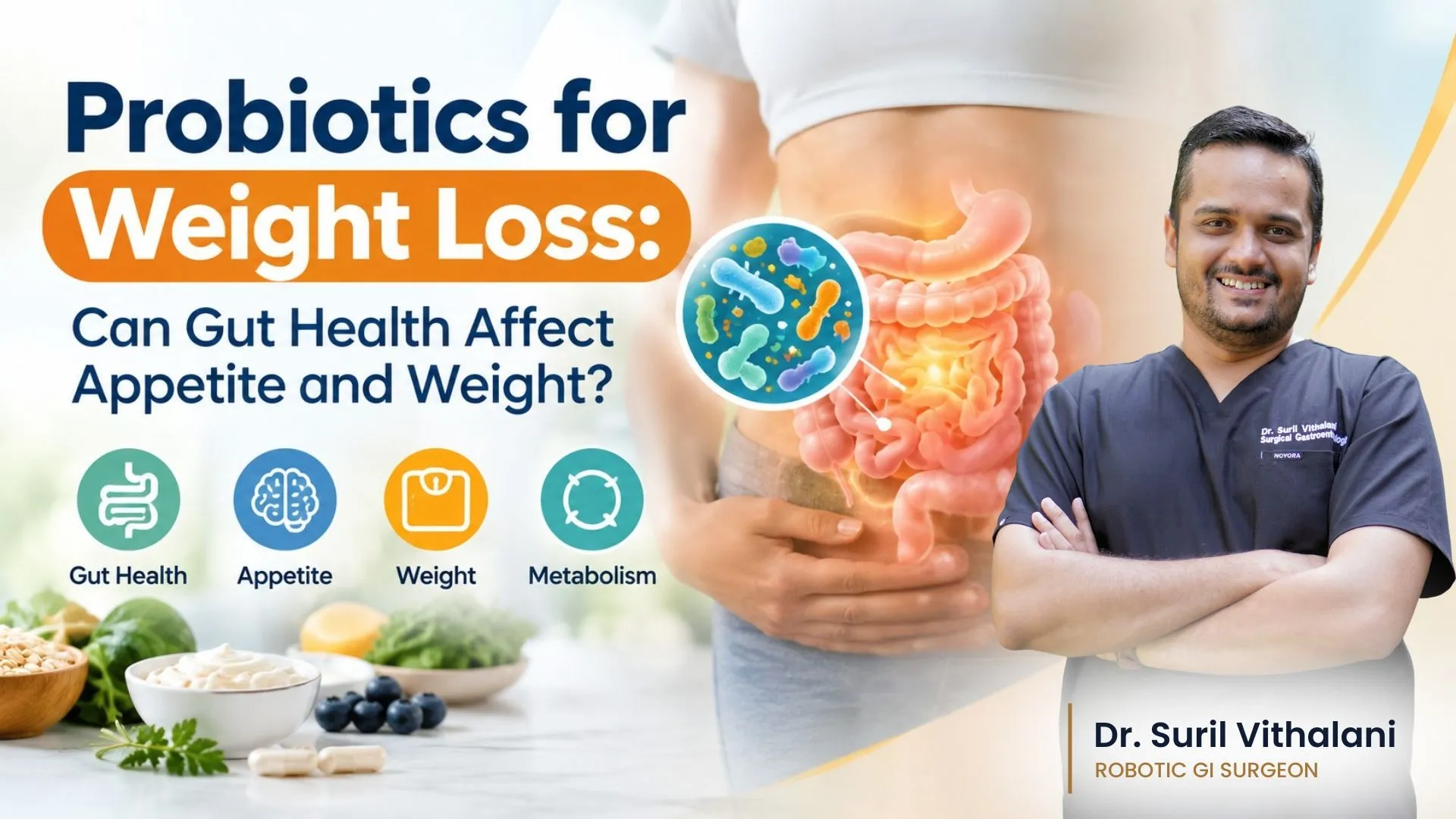
Weight loss is often discussed in terms of calories, exercise and metabolism. But there is another part of the body that is receiving increasing attention in digestive and metabolic health: the gut microbiome.
One question I hear regularly is: Can probiotics help with weight loss?
The answer is not as simple as many advertisements suggest.
Research has found that certain probiotics and prebiotic interventions may have modest effects on body weight, BMI or body composition in some people. However, the results vary between studies, and there is no single probiotic that can reliably suppress appetite or replace a healthy diet and appropriate weight management.
To understand why, it is important to look at the relationship between the gut microbiome, probiotics, prebiotics, postbiotics, appetite and metabolism.
What Is the Gut Microbiome?
The gut microbiome refers to the community of microorganisms that live in the digestive tract.
These microorganisms interact with the food we eat and are involved in processes related to digestion, metabolism, immune function and the intestinal environment.
The composition of the gut microbiome is different from person to person. Diet, lifestyle, medications, age, illness and other factors can influence it.
This is one reason why a probiotic that produces a benefit in one clinical study should not automatically be expected to produce the same result in every individual.
Researchers are continuing to study how changes in the gut microbiome may be associated with body weight, obesity, appetite, inflammation, metabolism and overall metabolic health.
Probiotics, Prebiotics and Postbiotics: What Is the Difference?
These three terms are often used together, but they have different meanings.
What Are Probiotics?
Probiotics are live microorganisms that, when administered in adequate amounts, provide a health benefit to the host.
An important point is that the word probiotic does not describe one single treatment.
Different probiotic strains can behave differently. A product containing one strain is not necessarily equivalent to another product containing a different strain or combination of strains.
Research on probiotics and weight management has produced mixed results. Some studies have reported modest reductions in body weight, BMI or waist related measurements, while others have found limited or inconsistent effects.
What Are Prebiotics?
Prebiotics are substrates that are selectively used by microorganisms in a way that provides a health benefit.
In practical terms, certain types of dietary fibre can support the growth or activity of beneficial microorganisms in the gut.
This is one reason dietary fibre and overall diet quality are important for gut health.
A supplement cannot compensate for a consistently poor dietary pattern.
What Are Postbiotics?
Postbiotics are a newer area of research.
An internationally accepted scientific definition describes a postbiotic as a preparation of inanimate microorganisms and or their components that provides a health benefit to the host.
Researchers are still investigating how postbiotics may influence intestinal health, immune function and metabolic processes.
It is therefore important to distinguish scientifically studied postbiotics from broad claims made about commercial gut health products.
Can Probiotics Reduce Appetite?
This is one of the areas where online claims can move faster than scientific evidence.
The gut communicates with the brain through what is commonly described as the gut brain axis. This involves neural, hormonal, immune and metabolic pathways.
Because certain microorganisms and their metabolites may interact with these pathways, researchers have investigated whether changes in the gut microbiome can influence hunger and satiety.
However, the evidence is still developing.
Research has not established probiotics as a reliable appetite suppression treatment. A systematic review of randomized controlled trials found minimal effects of probiotics on appetite related hormones in overweight and obese individuals.
This distinction is important.
A connection between the gut microbiome and appetite regulation does not automatically mean that taking a probiotic supplement will significantly reduce hunger.
Can Probiotics Help With Weight Loss?
There is some evidence that certain probiotic interventions may have modest effects on body weight or body composition.
Several published studies and meta analyses have reported small changes in body weight, BMI or fat related measurements in specific groups. However, the effects are generally modest and results vary considerably between studies.
One reason for this variation is that not all probiotics are the same.
The results may depend on:
- The bacterial strain
- The combination of strains
- The dose
- Duration of use
- The individual's existing gut microbiome
- Overall dietary pattern
- Physical activity
- Baseline metabolic health
- The specific health outcome being measured
This is why choosing a product simply because it is labelled "probiotic for weight loss" does not guarantee meaningful weight reduction.
Why Does the Probiotic Strain Matter?
One of the most important things to understand about probiotics is that they are not one uniform category of treatment.
Different strains can have different characteristics and may produce different effects.
Research has investigated microorganisms from groups such as Lactobacillus and Bifidobacterium in relation to body weight and metabolic health. Some studies have reported potential benefits, while others have found no significant change.
Therefore, the more useful question is not:
Which probiotic is best for weight loss?
A better question is:
Is there good evidence that this particular probiotic strain or formulation provides a meaningful benefit for this particular health goal?
This is a more reliable way to evaluate probiotic products.
Diet Still Plays the Most Important Role
This may be the most important point in the entire discussion.
A probiotic is not a substitute for a healthy diet.
The food we eat influences the environment in which our gut microorganisms live. Dietary fibre, plant based foods and overall diet quality can affect the substrates available to gut microorganisms.
This is why improving the overall diet should generally remain a priority rather than relying on supplements.
A probiotic capsule cannot cancel out a consistently high calorie, low fibre or highly processed diet.
Dietary and lifestyle interventions can influence aspects of the gut microbiome, although the exact relationship between microbiome changes and long term weight loss remains an active area of research.
Are Probiotics a Shortcut to Weight Loss?
No.
Probiotics, prebiotics and postbiotics are interesting areas of medical and nutritional research. Some interventions may provide benefits in specific circumstances.
But there is currently no universal probiotic that can reliably suppress appetite, burn abdominal fat or replace established approaches to weight management.
Even when a clinical study reports a statistically significant effect, the actual size of the benefit may be modest.
For someone trying to achieve healthy weight management, the fundamentals remain important:
- A balanced diet
- Appropriate calorie intake
- Adequate protein and dietary fibre
- Regular physical activity
- Sufficient sleep
- Management of underlying medical conditions
- Long term consistency
Gut directed interventions may become an increasingly personalised part of metabolic care in the future, but more research is needed.
Can Prebiotics Help With Weight Management?
Prebiotics are particularly interesting because they connect gut health with everyday food choices.
Certain dietary fibres can be used by gut microorganisms and their fermentation can produce metabolites such as short chain fatty acids, also known as SCFAs.
Researchers are studying these metabolites for their potential roles in intestinal and metabolic health.
However, increasing prebiotic intake does not automatically lead to weight loss.
The response can depend on the type and quantity of fibre, the individual's gut microbiome, overall diet and other metabolic factors.
Fibre rich foods are an important part of a healthy diet, but prebiotics should not be presented as a magic solution for weight loss.
Should Everyone Take a Probiotic Supplement?
Not necessarily.
Whether a person may benefit from a probiotic depends on their individual health circumstances and the reason for considering the supplement.
Taking multiple products simply because they are marketed for gut health or weight loss is not automatically better.
Supplements are also not a replacement for medical evaluation or treatment.
If you have persistent bloating, abdominal pain, unexplained weight loss, changes in bowel habits, blood in the stool or other concerning gastrointestinal symptoms, the priority should be a proper medical evaluation rather than self treatment with supplements.
If you are experiencing ongoing digestive symptoms in Ahmedabad, consult a qualified gastroenterologist for an appropriate evaluation and diagnosis.
The Future of Gut Health May Be Personalised
One of the most interesting areas of gut health research is personalised nutrition.
Instead of assuming that the same probiotic or dietary intervention will work for everyone, researchers are studying whether interventions can eventually be matched to an individual's microbiome, metabolic characteristics and health goals.
This could potentially lead to more personalised approaches to nutrition and metabolic health.
However, the science is still developing.
Important questions remain about which strains work, for whom they work, what dose is appropriate, how long they should be used and which specific health outcomes they can influence.
Frequently Asked Questions
Do probiotics really help with weight loss?
Some probiotic strains may produce modest changes in body weight or BMI in certain individuals. However, the results are inconsistent across studies, and probiotics should not be considered a primary weight loss treatment.
Which probiotic strain is best for weight loss?
There is no single probiotic strain that can be considered the best for everyone. Research has examined different strains, including strains from the Lactobacillus and Bifidobacterium groups, with mixed results. The evidence for a specific strain and formulation is more important than the word probiotic on a product label.
Can probiotics reduce appetite?
Current evidence does not establish probiotics as a reliable appetite suppression treatment. The gut brain axis may play a role in appetite regulation, but more research is needed to determine whether specific probiotic interventions can produce meaningful changes in hunger or satiety.
Do prebiotics help with weight loss?
Prebiotic fibres can support a healthy gut environment and may have metabolic benefits, but they are not a standalone weight loss treatment. Overall dietary quality, calorie balance, physical activity and long term consistency have a much greater role in weight management.
What are postbiotics?
Postbiotics are preparations of inanimate microorganisms and or their components that provide a health benefit. They are a developing area of research, and current evidence does not establish postbiotics as a proven weight loss treatment.
Can gut bacteria affect body weight?
The gut microbiome is associated with several processes related to metabolism, digestion and immune function, and researchers are studying its relationship with obesity and body weight. However, the relationship is complex and does not mean that changing gut bacteria alone will result in weight loss.
Is it safe to take probiotic supplements?
Probiotics may be appropriate for some healthy adults, but they are not suitable as a substitute for medical evaluation. People with persistent gastrointestinal symptoms or underlying medical conditions should discuss supplements with an appropriate healthcare professional.
Can I take probiotics while following a weight loss diet?
A probiotic may be used as part of an individual's overall health plan when appropriate, but it should not be expected to drive weight loss on its own. The quality of the overall diet, adequate nutrition, physical activity and calorie balance remain much more important.
The Bottom Line
The gut microbiome is closely connected with digestion, metabolism and overall health. Researchers are increasingly studying its relationship with obesity, appetite and weight management.
Probiotics, prebiotics and postbiotics are promising areas of research, but they are not magic solutions for weight loss.
Certain interventions may provide modest benefits in some people, but the results vary considerably.
The key principles are simple:
Strain matters.
Dose matters.
Individual response matters.
Diet matters most.
Gut health should be considered as part of overall health rather than as a shortcut to a particular number on the weighing scale.
As research develops, our understanding of the gut microbiome will continue to evolve. For now, the best approach is to remain interested in emerging science while being cautious about products that promise effortless weight loss.
If you have persistent digestive symptoms or concerns about your gastrointestinal health, seek an appropriate medical evaluation rather than relying on supplements alone.