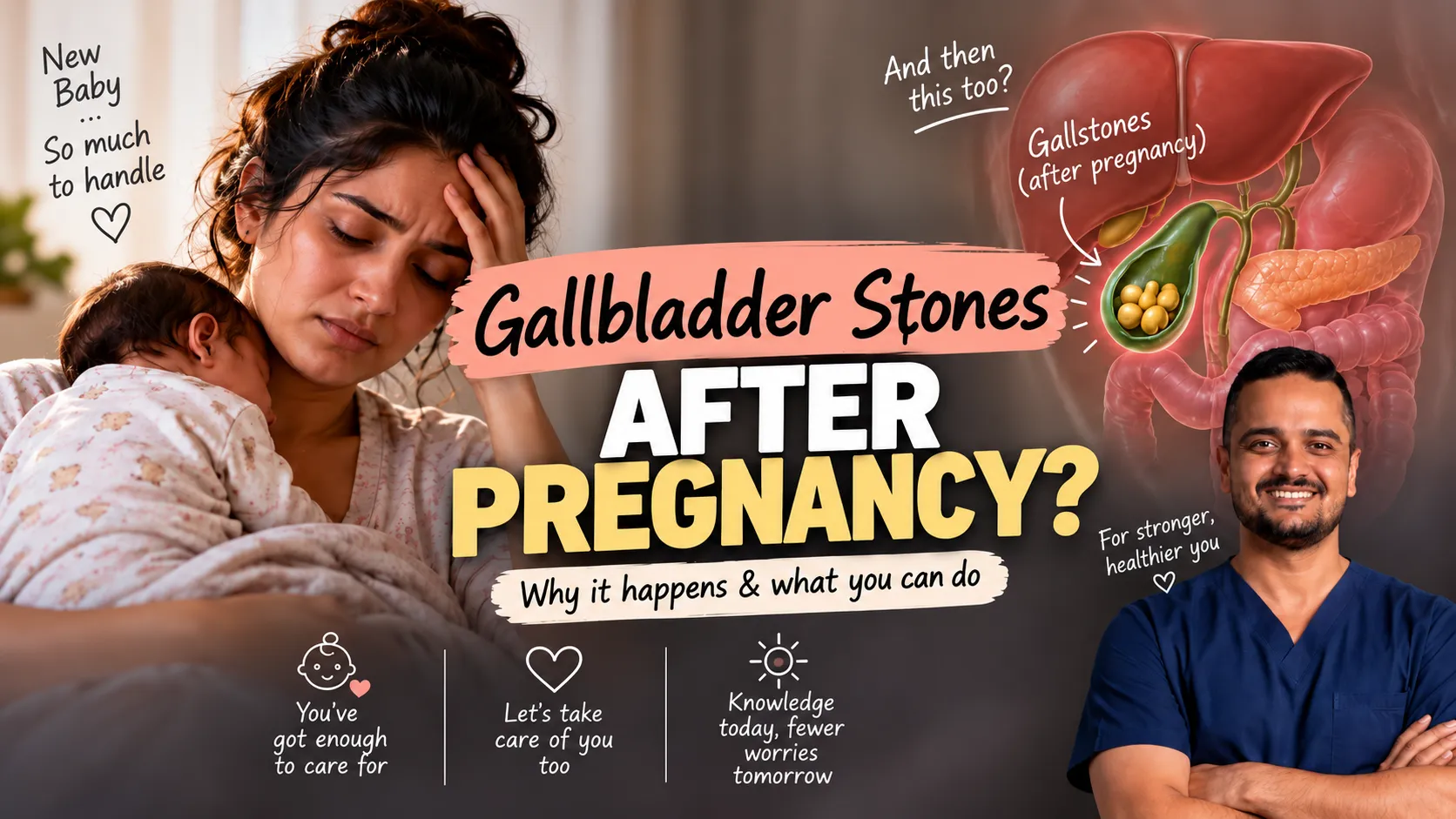
After childbirth, most attention naturally shifts towards the newborn. During this time, a new mother may overlook her own health while managing sleepless nights, feeding schedules, physical recovery, and the demands of caring for her baby.
As a result, recurring abdominal discomfort may sometimes be dismissed as acidity, indigestion, or “just gas.”
However, repeated pain in the upper right side of the abdomen, particularly after eating oily or fatty foods, may be associated with gallbladder problems such as gallstones.
A Brief About the Gallbladder
The gallbladder is a small, pear-shaped organ located beneath the liver. Its main function is to store and release bile, a digestive fluid produced by the liver that helps the body digest fats.
Sometimes, substances present in bile can harden and form gallstones. These stones may remain symptom-free for years, but if they block the normal flow of bile, they can cause pain, inflammation, and other complications.
Why Are Young Women Facing Gallbladder Problems?
Women, particularly during pregnancy and the postpartum period, can experience hormonal changes that may contribute to gallstone formation.
Higher levels of estrogen can increase cholesterol concentration in bile, while progesterone may slow gallbladder emptying. When bile remains in the gallbladder for longer periods, the possibility of stone formation can increase.
This is why some young women may begin experiencing gallbladder-related symptoms during pregnancy or in the months following delivery.
Common symptoms may include:
- Pain in the upper right abdomen
- Pain spreading towards the back or right shoulder
- Bloating or heaviness after meals
- Nausea and vomiting
- Discomfort after eating fatty or oily foods
An abdominal ultrasound is commonly used to identify gallstones and assess the condition of the gallbladder.
Gallstones that do not cause symptoms may not always require treatment. However, repeated pain, inflammation, or complications may require medical evaluation. In symptomatic cases, doctors may recommend laparoscopic gallbladder removal surgery (cholecystectomy).
Seek urgent medical attention if abdominal pain becomes severe or is accompanied by fever, jaundice, persistent vomiting, or dark urine.
A new mother’s health matters just as much as her baby’s. Paying attention to recurring symptoms and seeking timely medical advice can help prevent avoidable complications.
Frequently Asked Questions About Gallbladder Problems
1. Are gallstones common after pregnancy?
Pregnancy-related hormonal changes can increase the likelihood of gallstone formation in some women. Symptoms may develop during pregnancy or become noticeable after delivery.
2. What does gallbladder pain usually feel like?
Gallbladder pain commonly occurs in the upper right side of the abdomen. It may sometimes spread towards the back or right shoulder and can become more noticeable after a heavy or fatty meal.
3. Can gallbladder pain be mistaken for gas or acidity?
Yes. Mild gallbladder symptoms can sometimes feel similar to indigestion, gas, or acidity. Repeated or intense pain, particularly after meals, should be evaluated by a doctor.
4. How are gallstones diagnosed?
An abdominal ultrasound is one of the most commonly used tests to detect gallstones. Depending on the symptoms, a doctor may also recommend blood tests or additional investigations.
5. Do all gallstones require surgery?
No. Gallstones that do not produce symptoms may not require immediate treatment. When gallstones repeatedly cause pain, inflammation, infection, or other complications, surgery may be recommended.
6. Is laparoscopic gallbladder surgery safe?
Laparoscopic cholecystectomy is a commonly performed procedure for symptomatic gallstones. Whether surgery is appropriate depends on the patient’s symptoms, medical history, and clinical evaluation.
7. When should I seek immediate medical attention?
Seek urgent medical care if abdominal pain is severe or persistent, particularly when accompanied by fever, repeated vomiting, yellowing of the skin or eyes, or dark urine.